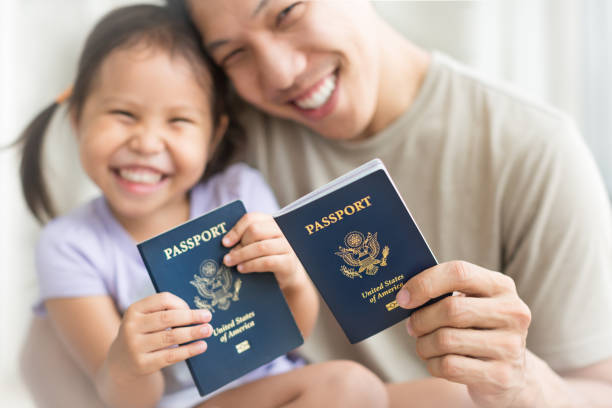
Can a child lose their U.S. Green Card after staying abroad for over a year?
What parents need to know about extended travel and U.S. permanent resident status.
A child with a U.S. Green Card may face immigration challenges after staying outside the United States for more than one year. Families considering extended travel for education, caregiving, or other reasons should understand how prolonged absences may affect their child’s ability to return.
An absence of more than one year does not automatically cancel permanent resident status. However, it can affect the Green Card’s validity as a travel document and raise questions about whether the child has maintained U.S. permanent residence. The outcome depends on the circumstances and applicable immigration requirements.
Does a child automatically lose their Green Card after one year abroad?
No. Spending more than one year outside the United States does not automatically terminate a child’s lawful permanent resident status.
However, U.S. Customs and Border Protection (CBP) explains that a Green Card is generally used to return to the United States after an absence of less than one year. For longer absences, a permanent resident generally needs a valid re-entry permit or may need to explore other immigration options.
Immigration authorities may also consider whether the individual intended to maintain the United States as their permanent home. Extended or frequent absences, and circumstances suggesting a person has established permanent residence elsewhere, may raise concerns about abandoning status.
The length of the absence is important, but it is not the only factor.
How does an absence of more than one year affect re-entry?
Permanent residents planning to remain abroad for one year or longer should consider applying for a re-entry permit before leaving the United States.
The application is made using Form I-131, Application for Travel Documents, Parole Documents, and Arrival/Departure Records. Applicants must be physically present in the United States when filing for a re-entry permit and must meet the applicable requirements.
A re-entry permit is generally valid for up to two years, although exceptions apply. It can help a permanent resident seek admission after an extended absence without first obtaining a Returning Resident visa, provided the permit remains valid and other requirements are met.
However, a re-entry permit does not guarantee admission or conclusively establish that permanent resident status has been maintained.
Parents should review the USCIS Form I-131 instructions before making extended travel arrangements.
What if the child is already abroad for more than one year?
Parents whose children are already abroad beyond the relevant travel-document validity period should contact the nearest U.S. embassy or consulate to discuss their circumstances.
One possible option is a Returning Resident (SB-1) immigrant visa. According to the U.S. Department of State, an applicant generally must demonstrate that they:
- Held lawful permanent resident status when they departed the United States.
- Departed intending to return and have not abandoned that intention.
- Were unable to return within the permitted period because of circumstances beyond their control and for which they were not responsible.
Applicants must provide supporting evidence, and approval is not automatic. If approved for returning resident status, they must also meet the applicable immigrant visa requirements.
Does the child’s age or family situation matter?
A child’s circumstances may help explain the reason for an extended stay abroad. For example, a child may have travelled to live with relatives, attend school, or receive family care while a parent remains in the United States.
However, these circumstances do not automatically preserve permanent resident status or guarantee re-entry.
Parents should consider the purpose and expected duration of the trip, the child’s ties to the United States, whether a re-entry permit was obtained, and whether unexpected circumstances prevented an earlier return.
Because each case depends on its specific facts, families should seek qualified immigration advice rather than assume that the rules will apply identically to every child.
What should parents do before an extended trip?
Parents planning for a child to remain abroad for an extended period should:
- Plan ahead: Review the expected length of the trip and applicable travel-document requirements before departure.
- Check re-entry permit requirements: Consult USCIS guidance to determine whether Form I-131 is appropriate.
- Keep supporting records: Retain travel documents and evidence of U.S. residence, family ties, and any circumstances that delayed the child’s return.
- Seek legal guidance: Consult a qualified immigration attorney before departure if the child is expected to remain abroad for a year or longer.
- Address prolonged absences promptly: If the child is already abroad beyond the relevant travel-document validity period, contact the appropriate U.S. embassy or consulate to explore available options.
Sources and Further Reading
- U.S. Citizenship and Immigration Services (USCIS). Welcome to the United States: A Guide for New Immigrants.
https://www.uscis.gov/sites/default/files/document/guides/M-618.pdf - U.S. Customs and Border Protection (CBP). Lawful Permanent Resident FAQs.
https://www.help.cbp.gov/s/article/Article1687?language=en_US - U.S. Citizenship and Immigration Services (USCIS). Form I-131: Application for Travel Documents.
https://www.uscis.gov/i-131 - U.S. Department of State. Returning Resident (SB-1) Visas.
https://travel.state.gov/content/travel/en/us-visas/immigrate/returning-resident.html
Related Articles


Latest Insights
- Kenya Class C work permit: Requirements, fees and how to apply

- Marriage to a U.S. Citizen: Why you don’t automatically get a Green Card

- Can a child lose their U.S. Green Card after staying abroad for over a year?

- American Immigration Update: DHS proposes $70,000 initial fee for F-1 student Optional Practical Training (OPT)

- Deportation in Kenya: Understanding Your Right to Due Process